Balance & Brushstrokes

How to Advocate for Yourself at the Doctor’s Office Without Apologizing
For years I did everything I could for my health and still hit a wall — not for lack of effort, but because my concerns were not being heard. Here is how I stopped apologizing for my questions and started participating in my own care. Your doctor brings medical expertise. You bring the experience of living in your body. Good care needs both.

If you have known me long enough, you know I’ve had my share of health issues. For a long time, I suffered with insulin resistance, high blood pressure, and more. I have always been diligent about doing everything in my power to take care of myself, but eventually I hit a wall. And that was not for lack of treatment or effort. It happened because the doctors I was seeing simply were not ready to listen to my concerns.
I want to make something very clear before I continue. This is not meant as a judgment of medical professionals or as criticism of the medical profession. I am simply relating my experience with certain people.
It happened so many times that I eventually went and learned everything I could about my health issues so I could make informed decisions and ask the right questions. And still, I was minimized.
There is an uncomfortable balance in advocating for your own health. I am not a physician. I don’t have medical training, and reading about my conditions does not give me the expertise of someone who spent years studying and practicing medicine.
But there was something I did know that no one else in that room could know in quite the same way: what it was like to live in my body every day.
I was the one waking up in pain every single day. I was the one who had no energy left after a Pilates class and had to lie down before I could go on with my day. I was living all of it, and being told to do more, try harder, or “do the work” felt condescending. I was doing the work. I was doing everything I could, and I was still getting nowhere.
What I learned was that doctors bring medical expertise. They went to medical school. They understand diseases, physiology, and treatment in ways I do not. But I was the only person who knew what I was experiencing every day. So I started changing the way I talked to them.
I needed someone to tell me what was happening and give me a solution. But medicine doesn’t always work that way. Sometimes there isn’t an obvious answer. Sometimes the first treatment doesn’t work. Sometimes the symptoms don’t fit neatly into the explanation we already have.
And that was particularly difficult for me. I have an engineer’s brain. I wanted to understand the system, identify what wasn’t working, and fix it. Here I was living in a body that felt increasingly “broken,” looking for an answer that nobody seemed able to give me.
Eventually, I realized that advocating for myself didn’t mean I needed to walk into the room with the answer. I needed to make sure the right questions—and all of the relevant information—stayed in the room long enough for us to look at them.
I started asking how the disease process was working in my body and how the medication was supposed to help. I asked what my bloodwork meant, what the practical goal of treatment was, what we were looking for, and what I should watch for at home. Eventually, instead of simply being directed, I was participating in the conversation.
What I learned was that agency doesn’t simply mean asking questions. It means participating, discussing, understanding, and investigating. Agency can look like a partnership between patients and doctors working toward a common goal. Because the goal is not simply to treat a disease. It is to treat a patient.
In practice, that changed the questions I asked. Instead of only asking what I should do, I started asking what we were trying to accomplish. What should I expect to change if a treatment is working? What should I watch for at home? What does a particular bloodwork result mean in the context of everything else? And if something isn’t working, what would we consider next?
I also learned to stop apologizing for those questions. Asking for clarification is not questioning someone’s expertise. Saying that something isn’t working is not being difficult. Bringing information about what is happening outside the exam room is not an inconvenience. It is information your medical team cannot have unless you provide it.
You don’t have to walk into your doctor’s office knowing the answer. You don’t have to diagnose yourself or arrive armed for battle. But you do belong in the conversation. Your doctor brings medical expertise. You bring the experience of living in your body. Good care needs both.

The Hidden Ways Women Override Their Body Signals All Day Long
Women override their body signals all day long, often without realizing it. After months of pushing and a summer that never felt like a summer, my own system finally hit a wall — the headache, the fog, the blood pressure spike, the neck pain that only eased when I lay down. None of it was failure; it was physiology, it was human. It is okay to let go, to ask for help, to need medical support, to be scared, to have anxiety, to slow down, to rest, to be human. Listening to your limits isn’t weakness; it’s wisdom. Your body is the messenger, and at some point, it deserves to be heard.

Women override their body signals all day long. We do it so quietly and so consistently that we barely notice it happening. We keep moving, keep producing, keep showing up — even when our bodies have already whispered, then spoken, then finally shouted that they need us to stop.
I didn’t fully understand how much I was doing this until my own system reached its limit.
For months, I had been pushing: building my business, preparing for a major exam, studying through the spring, and then the exam itself. I assumed summer would be my reset. Instead, it became another stretch of nonstop motion — travel, events, family responsibilities, preparing for vacation, and back‑to‑school already waiting on the other side. It was cumulative. A full year of “go” with no real pause.
Right after the exam, my blood pressure spiked. I have a history with it, but it had been stable for a while. I expected to bounce back quickly — the way I always do — but the next day I was slow, foggy, and depleted. And I kept going anyway. Errands, kids, appointments, daily functioning through heaviness. Women know this rhythm. We don’t stop; we adjust. We override.
Then came a long, hot day at an outdoor fair, followed by a family gathering. I moved through it all, even though my body was already signaling that it was done. The next morning, I woke up with a headache that felt like a weight behind my eyes. My blood pressure was high again. I still had to function: walk, drive, take my daughter to her activities. I called my doctor. The headache stayed all day, only easing when I finally lay down with heat on my neck.
That was the moment I understood: this wasn’t just old neck tension. This was my system hitting a wall.
And when that moment comes, it’s not a sign that we’re weak. It simply means we’re human. There is nothing shameful or broken about that. There is nothing to hide either, it is simply reality.
It is okay to let go, to ask for help, to need medical support, to be scared, to have anxiety, to slow down, to rest, to be human.
Physiology is not failure. Medication is not failure. Limits are not failure. Being overwhelmed is not failure. Being honest about what your body can and cannot do is not failure.
We talk about burnout as if it arrives in a dramatic collapse, but high‑capacity women rarely fall apart all at once. We erode quietly. In the fog. In the headache that won’t go away. In the neck that refuses to hold the load. In the blood pressure spike. In the moment lying down is the only thing that helps. We override until the body stops asking politely.
I’ve been doing better for months — truly better — and I still hit a wall. Not because I wasn’t disciplined enough or strong enough or organized enough. Not because I didn’t try hard. I hit a wall because I had been running for a year without a real pause, and my body finally told the truth my schedule wouldn’t allow.
Listening to your limits isn’t weakness; it’s wisdom. Your body is not the enemy, it’s the messenger — the one part of you that cannot lie, cannot pretend, cannot push past what is real. At some point, it deserves to be heard. And maybe that’s the invitation: to notice what your body has been trying to say and to give those signals a place to land.
Art prompt: paint or draw the moment your body asked you to stop, sketch the place where the tension lives, give color to the exact point where your system said “no more.” Sometimes making the invisible visible is the first step toward actually honoring it.

Your Health Data Is a Snapshot — Not the Whole Story
You’ve had this moment: you take a photo of something beautiful, and the picture looks nothing like what your eyes saw. Too dark, too bright, just… off. Not because the moment was wrong — but because the camera only captured a snapshot, not the whole scene.
Your health data works the same way.
A number is a snapshot. Your life is the photograph.
When you treat the snapshot like the whole story, you miss the context that actually explains your body.

Why Numbers Need Context
You’ve probably had this moment: You take a photo of something beautiful — your kid laughing, a sunset, a vacation morning — and the picture looks nothing like what you saw. Too dark. Too bright. Washed out. Off.
And instantly you think: How did the camera mess this up?
That gap — between what’s real and what the camera captures — is exactly how health data works. First: A Quick, Normal‑People Explanation of the Photography Stuff
You don’t need to know anything about photography for this to make sense.
What’s a histogram?
It’s just a tiny graph your camera uses to summarize brightness.
Not the picture. Just a quick “here’s how much light is in this shot.”
Why does it matter?
Because sometimes the summary looks “wrong” even when the photo is exactly right.
A picture of a dark room will always look “too dark” to the camera. A picture of snow will always look “too bright.”
The summary isn’t wrong. It’s just incomplete.
Health Data Works Exactly the Same Way
Your health numbers — BMI, A1c, fasting glucose, triglycerides, DEXA, waist circumference — are summaries.
Useful. Important. But incomplete.
They don’t tell the whole story because they don’t include:
your medical history
PCOS
gestational diabetes
medication effects
stress load
sleep
strength
symptoms
quality of life
what happened when you tried things in the past
That’s the photograph. The numbers are just the histogram.
Why “Normal Ranges” Don’t Always Fit You
Let’s make this even simpler.
What’s a bell curve?
It’s just a picture of how common something is.
Imagine lining up 1,000 women by height:
Most cluster in the middle
A few are much shorter
A few are much taller
That’s the bell curve.
Nothing fancy. Nothing statistical. Just “most people are here, fewer people are there.”
Health works the same way.
Most people fall in the “normal range.” Some don’t. The ones who don’t aren’t mistakes — they’re just less common.
The goal isn’t to force everyone into the middle. The goal is to understand why your body sits where it does.
Why This Matters for You
Because most women are taught:
Data → automatic conclusion → behavior correction
Your number is high → fix it. Your number is low → fix it. Your number changed → panic.
But real life requires:
Data → interpretation → context → action
This is why:
the same plan works differently at different ages
your body responds differently under stress
your hormones change the rules
your history matters
your medications matter
your lived experience matters
The “summary” changes because the scene changes.
The Real Takeaway
Numbers are helpful. Numbers are not the truth.
Your body is the photograph. The data is just the snapshot.
If you want clarity, you need both.
Art Prompt: The Snapshot Exercise
Take a photo of yourself right now.
Not posed. Not curated. Not “ready.”
Just… you.
Then ask yourself three things:
What does the camera capture? The surface. The lighting. The angle. The moment.
What does the camera miss? Your history. Your effort. Your stress. Your resilience. The invisible load you carry. The context that makes you you.
What would change if you treated your health data the same way? As a snapshot — not a verdict. As information — not identity. As a moment — not the whole story.
Because your phone can only see light.
It cannot see your life.
And neither can a single number.
Stress Eating: The Physiology Behind the Pattern
Stress eating is not a character flaw. It’s a physiological response to overload. When your nervous system is overwhelmed, your stomach tightens and digestion slows — hunger signals get scrambled, cravings intensify, and shame only makes the cycle worse.
In a world where everyone has an opinion about weight loss, I thought I’d demystify it a little bit. Obesity has recently been classified as a disease and as a disease, treatments for it exist. Sometimes GLP‑1s are prescribed, other times it’s diet and exercise. But what do all these really mean?
I want to start by saying my goal is not to say if anything is good or bad, right, or wrong. These are decisions people should discuss with their doctors and make with informed consent. What I really want to say here is that not every obese person fits the stereotype of the “lazy person who eats chips all day long.” For this post, I am going to talk about stress eating.
Stress eating is not a character flaw. It is a physiological response to overload. When your nervous system is overwhelmed, your stomach tightens, digestion slows, and your body starts sending mixed signals — hunger when you’re not hungry, cravings when you’re exhausted, or no appetite at all until you crash. This is not about discipline. This is about physiology trying to cope with too much.
Have you ever noticed what happens to your body when you are stressed? If you haven’t, pay attention. Do your shoulders tighten? Does your neck stiffen? Do you feel your stomach clenching? These are all physiological responses to stress, and they can strike anyone at any moment. And when they hit the stomach, that’s when mixed hunger signals begin and people get confused.
The stomach is a muscle, and just like any other muscle in your body, it contracts and expands. So those shoulders that get tight when you’re stressed? The stomach does the same. And when it tightens, digestion becomes incomplete, creating all kinds of chaos within the body — hunger at odd times, cravings, heartburn, indigestion, bloating, and more.
When digestion slows, the body still needs energy, so it looks for the fastest source it can find — usually sugar or simple carbohydrates. This is not a lack of discipline. This is your physiology trying to stabilize blood sugar while your nervous system is overwhelmed. Stress eating is the body’s attempt to cope with a system that feels unsafe or overloaded. It is a survival response, not a moral failure.
Stress can suppress appetite during the day and then create intense hunger at night. It can make you forget to eat entirely and then leave you ravenous hours later. It can make you crave sugar at 3 pm because your blood sugar crashed after a morning of cortisol spikes. It can make you feel full when you’re not, or hungry when you just ate. None of this is about willpower. It’s about a nervous system stuck in survival mode.
Why Shame Makes Stress Eating Worse
Shame activates the same stress pathways that caused the eating in the first place. When you judge yourself for stress eating, your nervous system tightens even more, digestion slows further, and cravings increase. Shame doesn’t stop the pattern — it fuels it. Compassion interrupts it. Understanding your physiology gives you a way out that punishment never will.
How to Notice Stress Eating Before It Happens
Stress eating often begins long before food enters the picture. It starts with tension in the shoulders, shallow breathing, racing thoughts, skipping meals because you’re overwhelmed, or feeling “wired and tired” at the same time. When you learn to notice these early cues, you can regulate before the eating spiral begins. Awareness is the first interruption of the cycle.
What You Can Do Instead
So, what can you do when stress eating becomes a pattern? You don’t need a diet. You need regulation. Eating regularly helps stabilize blood sugar, so your body doesn’t panic. Slowing down before meals helps relax the stomach muscle so digestion can actually happen. Adding grounding foods — not “good” or “bad,” just foods that feel steady — can calm cravings. And most importantly, reducing guilt around eating helps your nervous system settle instead of spiraling into shame. There are many ways to regulate stress, and none of them are “better” than others. You simply need the one that works for your body.
Stress eating is not about food. It’s about physiology, overwhelm, and a body trying to cope with too much. When you understand what your stomach, your nervous system, and your energy are doing under stress, you can respond with compassion instead of punishment. You don’t need more restrictions. You need more regulation, more steadiness, and more support. And that is where my work lives — helping you understand your body so you can make choices that feel humane, not harsh.
Art Prompt: Draw where you feel stress in your body.
Your body is not working against you. It’s communicating with you. When you learn to listen, everything begins to change.
The Science of Why Movement Matters
Movement is not about fitness. Movement is about regulation, resilience, and remembering that your body is a place you can return to. When life feels heavy or chaotic, the right kind of movement steadies your mood, supports your metabolism, and helps you feel safe inside yourself again.
Movement is not about fitness.
Movement is about regulation, resilience, and remembering that your body is a place to which you can return. It is about feeling safe inside yourself again. It is about having a way to steady your mood, support your metabolism, and move through the world with more clarity and less friction.
If you are navigating hormonal shifts, neurodivergence, chronic stress, or the quiet exhaustion that comes from caring for everyone but yourself, the right kind of movement can change how you feel in ways that go far beyond strength or stamina. Movement is not self-improvement. Movement is self-connection.
Why Walking and Cardio Are Foundational
Cardio is not about burning calories.
It is about keeping your system responsive.
When you walk, dance, swim, or cycle, your body does things you cannot see but absolutely feel. Blood sugar steadies. Blood pressure softens. Mood lifts. Sleep deepens. Thinking sharpens. Energy becomes more reliable. Even a simple walk after meals can regulate blood sugar more effectively than many supplements.
Walking is gentle on the joints, accessible in every decade of life, and powerful in ways the fitness industry rarely talks about. Walking is not easy. Walking is foundational.
Why Strength Training Becomes Essential as We Age
Muscle loss begins earlier than most women realize. Not because you are doing something wrong, but because biology shifts. Strength training helps you slow age related muscle loss, protect bone density, stabilize blood sugar, improve balance and coordination, support cognitive function, and stay functional and independent.
This is not about looking toned.
This is about refusing to become fragile in a world that already treats women as fragile. And yes, even in your seventies or eighties, your muscles can still respond. It is never too late to rebuild strength.
What The Research Recommends and How It Fits into Real Life
The CDC offers clear guidelines, but real life is not a controlled environment. You have responsibilities, fatigue cycles, hormonal shifts, and a nervous system that does not always cooperate on command.
Here is how the research translates into lived experience:
Adults (18 to 64)
150 minutes per week of moderate cardio and 2 days of strength
Real life: short walks after meals, resistance bands while watching TV, squats while the kettle boils
Older Adults (65+)
Same as adults plus balance work
Real life: chair yoga, tai chi, gentle dance, kitchen counterbalance drills
Pregnant or Postpartum
150 minutes per week of moderate aerobic activity
Real life: stroller walks, prenatal yoga, gentle stretching, honoring fatigue cycles
Chronic Conditions or Disabilities
Same goals, adapted
Real life: seated workouts, aquatic therapy, short bursts of movement, consistency over intensity
These are guidelines, not mandates. Your body, your season, and your bandwidth matter. Movement should feel like support, not pressure.
Your Body Changes, So Your Movement Should Too
What worked in your twenties may not work in your fifties. That is not regression. That is wisdom.
Movement needs shift with age:
• Thirties and forties: build strength and cardiovascular capacity
• Fifties and sixties: add mobility, balance, and joint friendly cardio
• Seventies and beyond: prioritize strength, flexibility, and fall prevention
Your body is not failing. Your body is evolving.
Let Us Be Clear About One Thing
I am not here to hand you a workout plan.
Not because I am holding back, but because that is not my lane. It is not the work I do, and it is also out of scope for a health and wellness coach.
What I can do, and what I do exceptionally well, is help you hear your body again so you can understand where to go from here. If you want someone to tell you exactly which exercises to do, that is the moment to bring in a fitness trainer. That is their lane.
But most women do not actually need another routine.
They need a relationship with themselves that is not built on pressure, guilt, or comparison.
You need someone who can help you understand why you avoid movement, why you push too hard, why you burn out, why you freeze, why your body feels different now, and what it is actually asking for. You also need support in figuring out how to implement the routines a fitness trainer may give you in a way that fits your life, your energy, your season, and your nervous system.
My work is helping you build the internal clarity that makes movement sustainable rather than punishing. It is about helping you return to your body with honesty, curiosity, and a sense of possibility.
Art Prompt: My Movement Map
Draw the outline of your body, the one you have today. Around it, add words that describe how you want to feel when you move. Strong. Grounded. Light. Steady. Playful. Add colors or shapes that match those sensations. Then add a few movement ideas that bring you closer to those feelings.
This is not a plan.
This is a conversation with your body.
Final Thought
You do not need discipline culture.
You do not need perfection.
You do not need to keep up with anyone else’s routine.
You need curiosity, compassion, and a willingness to explore what your body is asking for now. If you are ready to reconnect with yourself and build a movement practice that actually fits your life, I am here. My work blends physiology, reflection, and creative tools to help you move with intention rather than obligation.
Mindful Eating and Gentle Nutrition: A Reflective Approach
A gentle guide to reconnecting with hunger, fullness, and nourishment through mindful eating, balanced nutrition, and simple tools that support your body without rules or restriction.
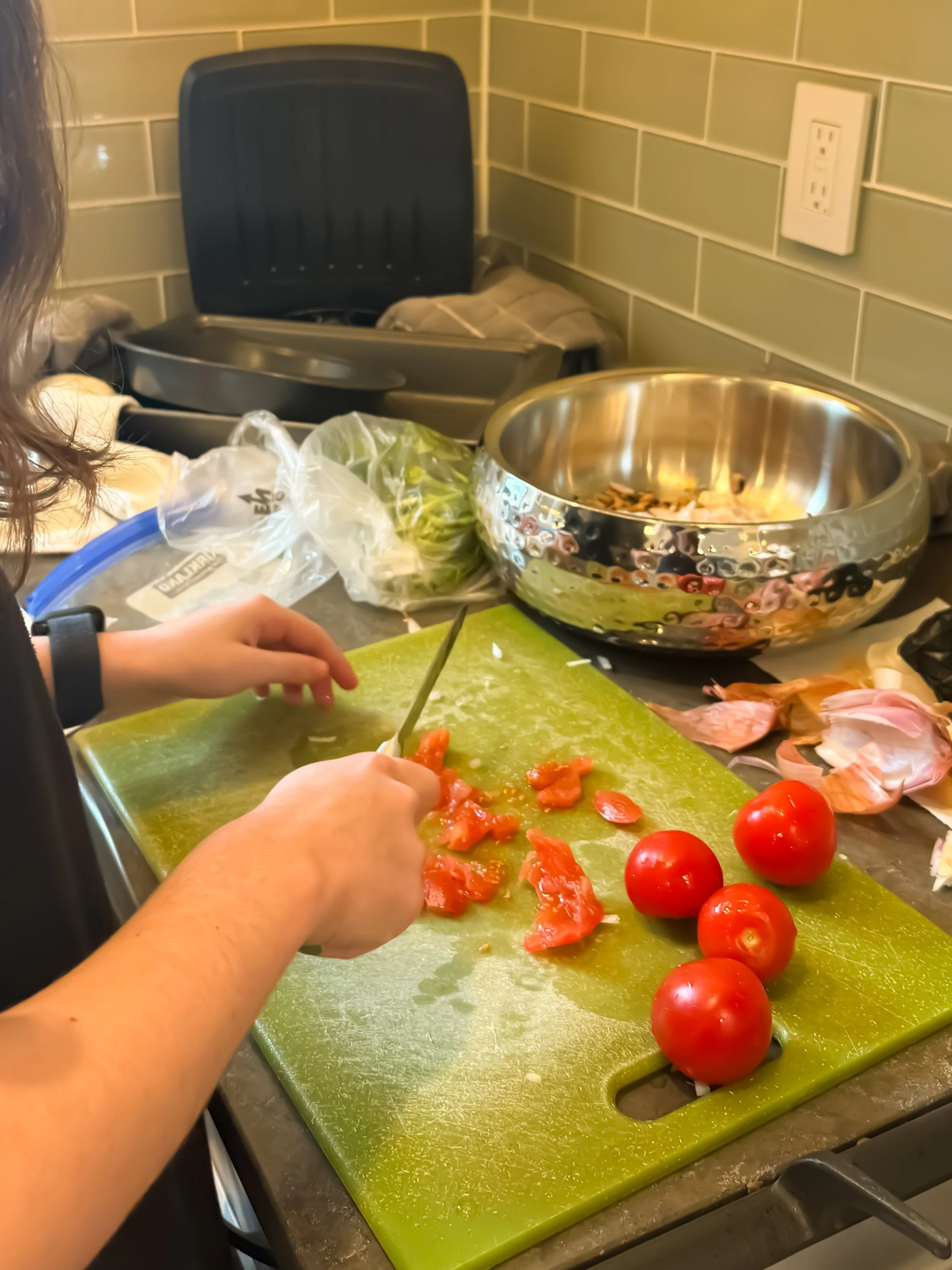
In a world full of food rules, calorie counts, and conflicting advice, it is easy to lose touch with the most important voice of all: your body’s. Mindful eating invites you to slow down, listen inward, and reconnect with the rhythms of hunger, fullness, and satisfaction. It is not about perfection. It is about presence. It is about asking, “What do I need right now?” and trusting the answer that arises.
Listening to Hunger with Curiosity
Before reaching for a snack or planning a meal, pause for a moment and check in. Ask yourself:
Am I physically hungry, or am I seeking comfort or distraction
What kind of nourishment would feel grounding right now
How do I want to feel after I eat
These questions are not meant to judge or restrict. They are invitations to reconnect. Over time, this gentle awareness builds trust with your body and helps you make choices that feel aligned with your energy, your emotions, and your values.
Understanding Macros Without Obsession
You may hear the term “macros” often in nutrition or fitness spaces. Short for macronutrients, macros are the three main types of nutrients your body needs in larger amounts: protein, fats, and carbohydrates. Each plays a unique role in your health and energy.
Protein supports tissue repair, hormones, and satiety.
Fats support brain health, hormone production, and long‑lasting energy.
Carbohydrates are your body’s preferred energy source, especially for your brain and muscles.
You do not need to count grams or track every bite to benefit from understanding macros. Simply noticing how different meals affect your energy, mood, and focus can become a powerful form of body literacy.
Visual Tools for Balanced Eating (Updated for the 2025–2030 Guidelines)
If you prefer a simple, visual way to build nourishing meals, the Harvard Healthy Eating Plate remains one of the clearest frameworks available. It encourages filling half your plate with vegetables and fruits, a quarter with whole grains, and a quarter with protein, alongside healthy fats, and water.
The CDC’s newest nutrition guidance, aligned with the 2025–2030 Dietary Guidelines for Americans, reflects a meaningful shift. The focus is now on whole, minimally processed foods as the foundation of daily eating. The updated framework encourages:
vegetables, fruits, whole grains, legumes, nuts, and seeds
lean proteins and dairy or fortified alternatives
healthy fats
water as the primary beverage
It also recommends significantly reducing:
ultra‑processed foods
refined grains
added sugars
sweetened beverages
The new guidelines also support a higher daily protein intake, with three to four servings per day fitting within a 2,000‑calorie pattern.
These tools are not rules. They are flexible frameworks that help you tune into what balance looks and feels like for your body, especially when paired with mindful eating and gentle nutrition.
Estimating Portions with Your Hands
One of the most intuitive ways to estimate portions is by using your hands:
Your palm can guide your protein portion
A cupped hand works well for carbohydrates
Your thumb is a natural measure for fats
Two open hands can represent a serving of vegetables
This method naturally adjusts to your body size and helps you stay connected to your hunger and fullness cues, without measuring cups or apps.
Curious About Tracking
If you are interested in exploring your personal macro needs, it is best to consult a registered dietitian or healthcare provider. They can help you determine your ideal intake based on your goals, age, and activity level.
If you are curious about experimenting with tracking, several apps can support you:
MacrosFirst
MyFitnessPal
Cronometer
Lifesum
Lose It!
These tools can be helpful, but only if they support, rather than stress, your relationship with food.
Mindful eating is not about control. It is about connection. When you listen to your body with curiosity, nourishment becomes clearer and more compassionate.
Art Prompt: “What Nourishes Me”
To deepen your reflection, try this creative exercise.
Create a visual representation of what nourishment means to you. It might be a collage of colors and textures, a drawing of your ideal meal or eating environment, or a symbolic image of how you want to feel after eating. Let your body guide your brush. Let the image emerge without pressure or expectation.
This kind of creative pause can reveal what words sometimes cannot. It brings you back to yourself.

What I Wish Women Knew About Their Bodies
Many women feel dismissed when their bodies send signals that something is off. This post helps you understand those signals, trust your intuition, and advocate for the care you deserve.

In my work I meet many women who are stretched thin and overwhelmed. They are doing their best to get through the day, but their bodies are not cooperating. They blame themselves for a lack of motivation, when the truth is that motivation is rarely the problem. Most women have plenty of motivation. What they lack are tools, clarity, and support.
Here is what I wish every woman knew.
Your body is not working against you.
Your body is communicating with you.
When something feels off, it is not a personal failure. It is information. Fatigue, irritability, brain fog, cravings, and low stamina are not character flaws. They are signals. And you are allowed to trust those signals.
You will hear people say “accept your body as it is,” and acceptance is important. But acceptance does not mean ignoring what feels wrong. If your body is not responding the way it should, trust your intuition. Seek medical care. Ask questions. Ask again. Look deeper.
If you are exhausted, ask yourself whether this is simply a lack of sleep or whether something metabolic is happening underneath. If your mood is unpredictable, ask whether your hormones are shifting. If your energy crashes every afternoon, ask whether your blood sugar is involved. Your intuition is often the first place where the truth appears.
The reality is that many women are dismissed when they ask for help. They are told that everything is fine when everything is not fine. You do not have to accept that. It is appropriate to ask for second, third, or fourth opinions. It is appropriate to advocate for yourself. It is appropriate to say, “This is not normal for me.”
Your body is not a machine. It is a system. Systems shift. Systems break down. Systems need attention. And women are expected to keep going regardless. We wake up, go to work, care for our families, and hold the emotional load of entire households. When your body stops responding, it is not weakness. It is a signal that something needs care.
If your car breaks, you take it to be repaired. You do not wait for it to fix itself. You deserve the same level of attention.
Your body is not the enemy.
Your body is asking for support.
And you are allowed to listen.
Your body is not asking you to be perfect. It is asking you to pay attention. When something feels off, you are allowed to pause, to question, and to seek support. You are allowed to trust what you feel, even if no one else has named it yet. You are allowed to advocate for yourself until you find answers that make sense.
The direction forward is simple. Begin by listening. Begin by noticing what feels familiar and what feels new. Begin by honoring the signals your body is sending. Begin by asking for help when you need it.
You do not have to figure everything out at once. You only need to take the next honest step toward yourself.
You are not dramatic. You are not imagining it. You are not too much. You are a woman whose body deserves to be taken seriously.
Your body is not a problem to solve. It is a relationship to tend to. When you begin to listen to it with curiosity instead of judgment, everything becomes clearer. You begin to understand what you need, what helps, what harms, and what supports your life. This is where real change begins. Not with discipline, but with awareness. Not with pressure, but with understanding. Not with perfection, but with presence.
If you want to take this reflection deeper, here is a creative prompt.
Art Prompt: Paint What Agency Means to You
Take a moment and think about the word agency. Not the definition, but the feeling. The moment when you knew you could trust yourself. The moment when you stopped apologizing for what your body was trying to tell you. The moment when you chose yourself, even quietly.
Now paint that feeling.
It does not need to look like anything specific.
It can be a color, a shape, a line, a landscape, or a gesture.
Let your brush move the way agency feels in your body.
Steady. Fierce. Soft. Expansive. Grounded. Clear.
This is not about skill.
This is about honoring the part of you that knows.

Drink to Thrive: The Real Power of Hydration
Hydration is more than drinking water — it supports energy, clarity, mood, and movement. Even mild dehydration affects focus, digestion, and performance. Learn how water and electrolytes help your body thrive, especially in heat or exercise, and how to build simple, sustainable hydration habits.

Water is more than a basic need. It is a quiet force behind your energy, clarity, and resilience. Especially in heat or during movement, hydration becomes a form of self‑respect. It is how you nourish the body’s rhythms and support its ability to adapt, recover, and thrive.
Why Hydration Matters — Beyond Thirst
Your body is about sixty percent water, and every system depends on it. When you are well‑hydrated, your blood flows more freely, your brain fires more clearly, and your muscles move with greater ease. Even mild dehydration can lead to fatigue, headaches, irritability, and slower thinking.
Hydration is not only about avoiding discomfort. It is about optimizing how you feel and function. Water helps regulate temperature, cushion joints, support digestion, and flush out toxins. It even plays a role in mood, focus, and memory.
Hydration and Movement: A Vital Partnership
When you exercise, your body heats up and cools itself through sweat. Sweat is not only water. It is also rich in electrolytes such as sodium, potassium, and magnesium. These minerals help your muscles contract, your heartbeat steadily, and your nerves communicate effectively.
Without enough fluids and electrolytes, your performance can suffer. You may feel sluggish, dizzy, or crampy. Even a two percent drop in hydration can reduce strength, endurance, and coordination. Staying hydrated before, during, and after movement helps you recover faster and feel more energized.
For most moderate workouts, water is enough. But if you are sweating heavily or exercising for more than an hour — especially in heat — consider adding electrolytes through tablets, powders, or drinks. Look for options with balanced sodium and minimal added sugar.
What If You Do Not Like Water?
Hydration does not need to be plain. Try:
Infused water with citrus, mint, or berries
Coconut water for natural electrolytes
Herbal teas, iced or warm
Sparkling water for a fizzy lift
Water‑rich foods such as cucumber, watermelon, and strawberries
The best hydration is the one you will actually enjoy.
How to Stay Consistently Hydrated
In the summer heat, do not wait until you are thirsty. Build hydration into your rhythm:
Start your day with a glass of water before coffee
Keep a water bottle visible and refill it often
Pair water with daily habits such as meals, breaks, or transitions
Use a hydration app or set gentle reminders
Track your intake with a visual cue or journal
Hydration is a practice, not a chore. It is a way of checking in with your body and honoring its needs.
Art Prompt: “What Does Nourishment Look Like”
Take ten to fifteen minutes to reflect visually. Using any medium — pen, paint, collage — create an image that represents what hydration or nourishment feels like in your body. Is it a flowing river, a blooming plant, a cool breeze, or something entirely different? Let your body guide the imagery, not your mind.
Then ask yourself: What else in my life needs this kind of replenishment?
If you feel called, share your reflection with me. I would love to hear what nourishment looks like in your body, through your art, your words, or your daily rituals. Let us hydrate with intention and creativity.
Just Start Moving: Why Exercise Is Not One‑Size‑Fits‑All and Why Your Body Deserves More Than Trends
Movement isn’t a trend or a test. It’s a relationship with your body — one most of us were never taught to build. Walking, strength training, and sustainable routines matter because they meet your real life, not an ideal. My own journey wasn’t about perfection but about adapting what I had and refusing to give up on myself.
Let us be honest. Most people do not struggle with movement because they are lazy. They struggle because the fitness world is loud, confusing, and full of confident voices saying different things. One person swears by Pilates. Another swears by strength training. Someone else says HIIT is the only way. Another says yoga is the answer.
It is not that anyone is wrong.
It is that your body is not a trend.
Movement is not a punishment.
Movement is not a makeover.
Movement is not a moral test.
Movement is not a before‑and‑after photo.
Movement is a relationship.
And most people have been taught to relate to their bodies like an enemy.
Why Walking and Cardio Actually Matter (and not for the reasons you were told)
Cardio is not about shrinking yourself. It is about staying alive. It is about keeping your heart responsive, your blood moving, your brain awake. A brisk walk after dinner does more for your blood sugar than half the supplements on the market. Walking is not “easy.” It is foundational. It is the baseline of human health.
If you cannot walk with intention, nothing else will land.
Why Strength Training Is Non‑Negotiable (especially for women)
Women lose muscle every year starting in midlife. Not because they are doing something wrong, but because biology is real. And the only thing that slows that loss is resistance. Not motivation. Not mindset. Not manifesting. Resistance. Your muscles need to be challenged or they disappear. And when they disappear, everything gets harder — metabolism, balance, energy, mood, aging itself.
Strength training is not about looking toned. It is about staying functional. It is about refusing to become fragile in a world that already treats women as fragile.
Your Body Changes — and Pretending It Does Not Is Not Empowerment
What worked in your twenties will not work in your fifties. That is not a failure. That is evolution. Hormones shift. Recovery changes. Joints speak louder. Sleep becomes a negotiation. Movement is not about going back. Movement is about going forward with honesty.
The Part No One Tells You: You Can Love a Workout That Is Wrong for Your Body
People say, “do what you enjoy,” but enjoyment is different from suitability.
You can enjoy something that is slowly hurting you.
You can enjoy something your joints cannot sustain.
You can enjoy something that spikes your inflammation.
You can enjoy something that drains your nervous system.
And you can avoid something that would actually help you because you assume it has to look a certain way.
This is why “just do what you like” is incomplete.
Enjoyment is one data point.
Your body is the rest.
So How Do You Know What is Right for You?
There is no single test.
No machine.
No algorithm.
No influencer chart.
But there are ways to understand your body:
A physical therapist can assess your mechanics, your joints, your gait.
An exercise physiologist can assess your cardiovascular tolerance.
A skilled instructor can see your compensations and limitations.
Your body gives you feedback.
Your life gives you constraints.
Your preferences give you sustainability.
Movement is not a method.
Movement is a mosaic.
My Story: The HIIT That Is not HIIT
My version of HIIT is walking. Not the fitness‑industry HIIT — my HIIT. One minute fast, three minutes slower, repeated until I hit 30 minutes. In the beginning, “fast” meant 3.3 mph on my walking pad. Now it is 4.2. My “slow” was around 3.0. I read an article about walking intervals and adapted it to my reality: a DeerRun walking pad with no incline, weather that kept me indoors, joints that needed low impact, a thirty‑minute emotional limit, and a temperament that needed structure.
I did not know if it were “right.”
I only knew it was something I could actually do.
And over two years, it took me from barely managing a few minutes to walking two miles in 30 minutes. Not because I followed a method. Because I built one — out of constraints, trial and error, and the simple refusal to give up on myself.
I am not telling this story to be anyone’s inspiration in the glossy, dreamy sense. I appreciate admiration — truly. It means something when people see the work I have done. But I am not here to be admired from a distance or put on a pedestal. I am not a role model. I am not a blueprint. I am not someone to copy.
I am a person who has been to hell and back and had to build something that worked because my body was fighting me and no one was coming to save me.
People look at me now and say, “You did it,” or “You are such an inspiration,” or “You finally decided to move.” But they do not see the years of inflammation, the medication, the exhaustion, the false starts, the days I could not do anything, the days I cried on the treadmill, the days I had to negotiate with myself just to show up for 10 minutes.
If my story inspires you, let it inspire you to not give up on yourself — not to try to become me. I do not want to be the fantasy version of inspiration. I want to be the real kind: the kind that says, “If I could figure something out with the limits I had, you can too — and if you need help, I am here.”
Movement is not about choosing a method.
Movement is about choosing yourself.
Art Prompt: My Movement Map
Draw the outline of your body — the one you have today.
Around it, write the words that describe how you want to feel when you move:
strong, grounded, light, powerful, steady.
Add colors or shapes that match those sensations.
Then write one or two movements that bring you closer to those feelings.
This is not a plan.
It is a compass.

When the Body Slows Down: A Wellness Coach’s Guide to Hypothyroidism
Hypothyroidism often begins as a heaviness you can’t explain — fatigue, fog, weight gain, mood shifts. Labs may say you’re “fine,” but your body tells another story. This isn’t laziness or aging. It’s a real physiological slowing, and you’re allowed to respond with clarity, support, and self‑trust.

There is a particular kind of exhaustion that sleep does not fix, a heaviness that settles into the body and a fog that drifts across the mind, a quiet sense that something inside has dimmed. For many people this is the first whisper of hypothyroidism, a slowing of the small butterfly‑shaped gland in the neck that helps regulate metabolism, energy, and mood. It is a shift that can feel subtle at first, almost like life has become slightly out of reach, as if you are moving through your days wrapped in a thin layer of distance.
What makes hypothyroidism so difficult to recognize is how easily it blends into the noise of modern life. Fatigue becomes normal, weight gain becomes self‑blame, forgetfulness becomes stress, sadness becomes personality. You might feel like you are dragging yourself through the day or losing words mid‑sentence or watching your life from behind a pane of glass. You might feel cold when others are warm or notice your hair thinning or your digestion slowing or your mood flattening. And because weight gain is so moralized in our culture, many people assume they have failed rather than realizing their body is slowing for reasons that have nothing to do with discipline.
Sometimes the labs come back “normal” even when nothing about your life feels normal. This is one of the most painful parts of hypothyroidism. You feel the heaviness, the fog, the slowing, the weight gain, the disconnection, and the numbers tell you that you are fine. But numbers do not live in your body. You do. And you are allowed to trust what you feel even when the labs have not caught up yet.
As a coach I do not diagnose, but I do listen, and when I hear these patterns I invite clients to consider what their body might be trying to say. Sometimes that means exploring a full thyroid panel, not only TSH but also Free T4, Free T3, and thyroid antibodies that can reveal whether the immune system is involved. These antibodies can appear years before hormones shift, small signals that something deeper is stirring. You might still be functioning, still pushing, still performing, but the fog is already forming at the edges. Paying attention early is not fear. It is agency. It is the moment you decide that your exhaustion deserves more than a motivational quote or another cup of coffee.
Support can take many forms, and none of them require perfection. Nourishment that steadies you. Movement that does not punish you. Rest that is not earned. A slower pace that is not a failure. Conversations with providers where you ask the questions you were taught not to ask. You are allowed to understand how your symptoms are being weighed alongside your labs. You are allowed to explore treatment options. You are allowed to participate in your care rather than simply comply with it.
Hypothyroidism invites you to honor slowness not as a flaw but as a message. Restorative practices, breath that softens the edges of the day, gentle strength that rebuilds trust between you and your body. Naming what is happening matters too, because the shame that often accompanies fatigue or weight gain begins to dissolve when you understand that this is not a lack of willpower. It is a physiological shift, and you are allowed to respond to it with clarity rather than criticism.
You do not have to accept heaviness as your new normal. You do not have to make peace with a body that is asking for help. You get to intervene. You get to participate. You get to choose the pace that brings you back to yourself.
Hypothyroidism is not laziness. It is not aging. It is not a personal failure. It is a physiological slowing, and you are allowed to meet it with care. Agency is not about forcing the body to speed up. It is about listening to what the body is asking for and responding in a way that honors both your biology and your becoming.
Art Prompt: The Weight I Carry
Choose one place in your body where you feel the weight of this season, whether physical or emotional, and create an image that gives that weight shape. Let color or texture or movement express how it feels to carry it. Then imagine what lightness might look like beside it, not as a replacement but as a possibility. Let the contrast show you where your agency lives, in the space between what is heavy and what is ready to shift.
Menopause, Bone Loss, and Oral Health: The Connection We Rarely Talk About
Hormonal changes during menopause affect far more than we expect, including the jawbone and gums. This piece explores how bone loss shows up in the mouth and why prevention matters.
Last week I had the pleasure of joining a small conversation about women’s health, held at Clemente Orthodontics in Ridgewood, New Jersey. It was a topic many of us rarely think about, even though it affects every woman as she ages. We often hear that bone mass and muscle mass decline over time, and that menopause accelerates that loss. This is biology. What most women do not realize is that this loss does not occur only in the arms and legs. It also occurs in the mouth.
Menopause brings a wide range of symptoms, and one of the most significant is hormonal imbalance. These hormonal shifts affect the jawbone and increase inflammation, which in turn affects the gums. This is why many women notice bleeding during dental cleanings, even when they have excellent oral hygiene. It is not a failure of brushing or flossing. It is a reflection of what is happening hormonally and structurally in the body. And the only meaningful way to address it is prevention.
Kathleen, a nurse practitioner at The Wellness in Ridgewood in New Jersey, works with women to test hormone levels and determine whether hormone replacement therapy is an appropriate option. According to her, when women are proactive and get tested early, there is a real opportunity to reduce symptoms that can become severe and disruptive. When hormone support is paired with resistance training, women can significantly reduce or even prevent the bone and muscle loss that accelerates during menopause.
Resistance training does not have to be complicated. It can include bodyweight exercises, resistance bands, light weights, Pilates with springs, or machines that provide controlled load. The goal is not intensity. The goal is stimulus. When muscles pull on bones, the bones respond by maintaining or increasing density. This applies to the hips, the spine, the legs, and yes — the jawbone. Strength training is not only about aesthetics or fitness. It is a direct investment in long‑term bone health.
Dr. Moon, a periodontist at Moon Implants and Perio in Montvale, New Jersey, explained that she often sees the effects of aging and menopause directly in the mouth. She shared that teenagers with braces and poor oral hygiene can show no bone loss at all, while older women with excellent oral hygiene may show significant bone loss simply because hormonal changes affect every bone in the body, including the jaw. A periodontist is a specialist in gum and bone health, and they can identify these early changes and help women understand how oral bone loss reflects what is happening throughout the body.
This is the part of women’s health that often goes unspoken. We think of menopause as hot flashes or mood changes, but it is also about bone density, muscle strength, oral health, and long‑term quality of life. The earlier we understand this, the more empowered we become to protect our bodies as we age.
Art Prompt: Where Strength Lives Now
Choose one part of your body that feels different with age, the place where you notice change first, the place you return to with curiosity or frustration or tenderness. It might be your legs or your breath or your posture or your hands. Create an image that shows the strength that still lives there, even if that strength has changed shape. Let the artwork be a conversation with the part of you that is aging and still carrying you, a reminder that aging is not disappearance but transformation.

Aging Through the Decades: The 80s and Beyond
In your eighties, the body speaks more quietly but more clearly. This post explores the physical and emotional shifts of this decade and why honoring your limits is a form of presence, not loss.

Epilogue: Legacy and Light
The eighties and beyond are often imagined as a time of fading, but in truth, they can be a time of distilling. Of living more slowly, but more clearly. Of speaking less but saying more. This is a stage where presence becomes the practice, and where the body, though quieter, still holds stories worth honoring.
You are not disappearing. You are arriving.
What Is Happening in the Body
In your eighties and beyond, the body may feel more delicate or more deliberate. Muscle mass, bone density, and balance may continue to shift. Skin becomes thinner, and energy may fluctuate more noticeably. Yet the body is still communicating, still asking for care, still offering wisdom.
This is a time to move gently, to nourish consistently, and to rest deeply. It is not about doing more. It is about doing what matters.
When Emotions Feel Like Memory
Emotionally, this stage can bring a sense of reflection. You may revisit old memories, reconnect with long held values, or feel a desire to share your story. There may be grief, but also gratitude. There may be quiet, but also clarity.
This is a time to honor your emotional life, not only what you feel now, but everything you have carried and released along the way.
Skincare, Sun Care, and Self Care
Skin in this stage is often fragile and dry. Gentle, emollient rich products can help soothe and protect. Touch becomes even more important, whether through massage, warm baths, or simply applying lotion with care.
Sunlight and Vitamin D
Vitamin D remains essential for bone strength, immune support, and mood. The skin’s ability to produce it from sunlight decreases with age, so short, safe sun exposure is helpful, and supplementation may be needed. Continue to protect your skin with SPF when outdoors. Sun care now is about comfort, protection, and honoring the skin that has carried you through decades.
Self-care in this stage is about presence. It is about choosing what brings peace, what brings beauty, and what brings connection.
Caring for Your Body and Mind
Eat nourishing, easy to digest meals. Focus on warmth, color, and comfort.
Hydrate gently and often. Small sips throughout the day support energy and clarity.
Move with softness. Gentle stretching, walking, or chair-based movement can support circulation and mobility.
Prioritize rest and rhythm. Let your days be guided by what feels good, not what feels expected.
Support your emotional wellbeing. Storytelling, music, art, and connection can help you feel seen and valued.
If You Are in Your 80s or Beyond
You are not invisible. You are essential.
Your body is not broken. It is wise.
Let your care be an act of love for yourself and for the life you have lived.
Ask for support when you need it. You are still worthy of care.
If You Are Reflecting Back
What did you begin to surrender in your eighties
What did your body teach you about stillness
What would you say to your 80 something self now
Art Prompt
Weave your legacy.
Create a visual thread of your life: symbols, colors, or shapes that represent what you have lived, what you have learned, and what you want to leave behind. Let it be soft, bold, quiet, or wild. Let it be yours.

Aging Through the Decades: The 70s
In your seventies, the body becomes more deliberate and more vocal about its needs. This post explores the physical and emotional changes of this decade and why honoring your pace is an act of wisdom, not limitation.

The seventies are often seen as a time of slowing down, but they can also be a time of deepening. You may be living more quietly, but with more clarity. There is often a sense of freedom in this decade: freedom from expectations, from comparison, and from the need to prove anything. You have lived through so much, and now you get to choose how you want to live.
What Is Happening in the Body
In your seventies, your body may feel more sensitive, more deliberate, or more vocal about its needs. Muscle mass continues to decline unless supported by movement. Balance and coordination may shift. You might notice changes in appetite, digestion, or sleep.
These changes are not signs of weakness. They are reminders to move with care, to listen closely, and to honor the body that has carried you this far.
When Emotions Feel More Spacious
Emotionally, your seventies can bring a sense of peace or a desire to make peace. You may feel more connected to your values, more present in your relationships, and more curious about your legacy. This is a time to reflect, to share, and to savor.
There may also be grief for people, places, or parts of yourself that have changed. That grief deserves space. It is part of the richness of this stage.
Skincare, Sun Care, and Self Care
Skin may become thinner, more fragile, or more prone to dryness. Focus on gentle, nourishing care: creams and oils that support hydration and barrier repair.
Sunlight and Vitamin D
Vitamin D remains essential for bone strength, immune support, and mood. Your skin may be less efficient at producing it from sunlight, so short, safe sun exposure is helpful, and supplementation may be needed. Continue using SPF daily to protect your skin from further damage. Sun care at this stage is about honoring the skin you are in and protecting it with love.
Self-care in your seventies is about ease. It is about choosing what feels good, what feels meaningful, and what feels like you. That might mean more rest, more nature, more art, or more connection.
Caring for Your Body and Mind
Eat to support strength, digestion, and vitality. Include protein, fiber, and nutrient dense foods.
Hydrate consistently. Dehydration can affect energy, mood, and cognition.
Move gently and regularly. Walking, stretching, balance work, and light strength training help maintain mobility and confidence.
Prioritize rest and rhythm. Sleep may shift. Create routines that support calm and comfort.
Support your emotional wellbeing. Journaling, storytelling, creativity, and connection can help you feel grounded and seen.
If You Are in Your 70s Now
You are allowed to rest.
Your body is not less. It is wise and worthy.
Let your care be an act of reverence.
Ask for support when you need it. You are not alone.
If You Are Reflecting Back
What did you begin to release in your seventies
What did your body teach you about presence and patience
What would you say to your 70 something self now
Art Prompt
Weave your life thread.
Draw or paint a long, flowing line that represents your life so far. Where does it twist, stretch, soften, or shine
Let the image reflect the wisdom and rhythm of your seventies.
Continue the series: Read about the 80s.

Aging Through the Decades: The 60s
The sixties bring real changes in muscle mass, bone density, balance, and energy. This post breaks down what’s happening beneath the surface and how to understand these shifts without fear or self‑blame.

The sixties are often seen as a time of slowing down, but for many, they are a time of opening up. You may be retiring, redefining your role in family or community, or choosing to live more on your own terms. There is often a sense of perspective that comes with this decade: a clearer view of what matters and a deeper appreciation for the body and life you have lived.
What Is Happening in the Body
In your sixties, the body continues to change, but not in ways that need to be feared. Muscle mass may decline more noticeably, joints may feel stiffer, and balance or coordination may shift. Bone density becomes a key focus, especially for women post menopause.
You may also notice changes in digestion, skin texture, or energy levels. These shifts are natural. They are not signs of failure. They are reminders to move with your body, not against it.
When Emotions Feel More Spacious
Emotionally, your sixties can bring a sense of peace or a desire to make peace. You may feel more comfortable in your own skin, more willing to say no, and more curious about what brings you joy. This decade can also stir reflection: on aging, on mortality, and on what you still want to experience or express.
This is a time to honor your emotional life. To let go of what no longer serves you and to make room for what feels nourishing.
Skincare, Sun Care, and Self Care
Skin may become thinner, drier, or more sensitive in your sixties. Focus on moisture, barrier support, and gentle care. Products with ceramides, peptides, or nourishing oils can help support your skin’s natural resilience.
Sunlight and Vitamin D
Vitamin D remains essential for bone health, immune function, and mood. Your skin may be less efficient at producing it from sunlight, so short, safe sun exposure is helpful, and supplementation may be needed. Continue using SPF daily to protect your skin from further damage. Sun care at this stage is about honoring the skin you are in.
Self-care in your sixties often means tuning in more deeply. It is about choosing what feels good, not what looks good to others. It might mean more rest, more movement, more creativity, or more stillness.
Caring for Your Body and Mind
Eat to support bones, digestion, and energy. Include calcium, magnesium, fiber, and anti-inflammatory foods.
Hydrate consistently. Water supports joint health, skin, and cognitive function.
Move with intention. Strength training, balance work, and gentle cardio help maintain mobility and confidence.
Prioritize sleep and recovery. Sleep may shift. Create calming routines and protect your rest.
Support your emotional wellbeing. Creative practices, community, and reflection can help you stay connected to meaning and joy.
If You Are in Your 60s Now
You are allowed to take up space.
Your body is not less experienced.
Let your care be an act of celebration, not correction.
Ask for support when you need it. You are not meant to do this alone.
If You Are Reflecting Back
What did you begin to integrate in your sixties
What did your body teach you about presence
What would you say to your 60 something self now
Art Prompt
Paint your future self.
Not how you look, but how you feel. What colors, shapes, or textures express the version of you that emerged in your sixties?
Continue the series: Read about the 70s.

PCOS Beyond Fertility: A Metabolic Journey Through the Body
PCOS goes far beyond periods and pregnancy. It’s a metabolic condition shaped by insulin resistance, hormonal shifts, and real physiological strain. This post explains what’s happening in the body and why it’s not your fault.

Polycystic Ovary Syndrome (PCOS) is often misunderstood as a reproductive issue. But from a health coach’s perspective, it is time we shift the narrative: PCOS is a complex metabolic condition that affects far more than fertility. It is a whole-body experience — one that calls for compassion, curiosity, and a deeper reconnection with our internal rhythms.
PCOS Is Not Just About Periods or Pregnancy
While irregular cycles and fertility challenges are common, PCOS is rooted in insulin resistance, a condition where the body struggles to use insulin effectively. This metabolic dysfunction can lead to:
Elevated blood sugar and insulin levels
Increased androgen production (testosterone)
Fat storage around the abdomen
Cravings, fatigue, and mood swings
Over time, this can evolve into metabolic syndrome, a cluster of risk factors including high blood pressure, high triglycerides, low HDL cholesterol, and increased risk of type 2 diabetes and cardiovascular disease.
PCOS in Men? Yes, it is Possible
Emerging research suggests that men with genetic risk factors for PCOS may also experience related metabolic symptoms— like insulin resistance, obesity, and early-onset baldness, even without ovaries. This reinforces the idea that PCOS is not solely a gynecological issue, but a systemic metabolic condition that transcends gender.
Why Weight Loss Feels So Hard
Many people with PCOS are told to “just lose weight,” but the reality is far more complex. PCOS creates a metabolic environment where the body is working against itself, not because you’re doing anything wrong, but because your physiology is under strain.
Here’s what’s happening beneath the surface:
Insulin resistance promotes fat storage, especially around the abdomen
Hormonal imbalances increase hunger and cravings, making food feel urgent
A lower metabolic rate means fewer calories burned at rest
Stress and emotional load can amplify eating patterns, not out of weakness but survival
When all of these forces are happening at once, it’s no wonder people feel overwhelmed or like nothing “works.” This isn’t a motivation issue — it’s physiology.
Some people find support through supplements or conventional medications, while others benefit from nutrition changes, movement, or nervous‑system‑based approaches. There is no single path. What matters most is finding a provider who sees your whole body, listens to your lived experience, and offers care that respects you rather than telling you to simply “try harder.”
PCOS is a chronic metabolic and hormonal disorder that requires appropriate medical care. It is not caused by personal choices, it is not a motivation issue, and it is not simply a fertility problem. PCOS cannot be resolved through effort or discipline alone. When you understand the underlying physiology, you’re better equipped to seek treatment that addresses the full picture of your health.
Art Prompt: The Metabolic Map of Me
Create a visual representation of your internal terrain. Where do you feel stuck, inflamed, or heavy? Where is there flow, lightness, or resilience? Use color, texture, and shape to map your hormonal and emotional landscape. Let this be a non-verbal dialogue between you and your body.