Balance & Brushstrokes

You Are Not Your Lab Results
We love numbers because they feel clear and objective. But behind every lab result is a person carrying responsibilities, stress, fatigue, and a life that doesn’t fit neatly into a chart. You are not your A1C or your blood pressure. You are the human those numbers belong to — and real change begins when we honor that truth.

We love numbers.
They are clean. Objective. Easy to put in a chart.
A1C: 6.2.
Blood pressure: 140/90.
LDL: 160.
Weight: up five pounds.
There it is. The problem.
Except…
Where is the person?
The person who hasn’t slept properly in three weeks.
The person who is caring for an aging parent while raising teenagers and trying to keep a job.
The person who just started a new medication.
The person who exercises regularly but has spent the last month traveling.
The person who is doing everything “right” and is still staring at a number that says something isn’t right.
The lab isn’t wrong. But it isn’t the whole story.
Data matters. Medicine matters. Treatment matters.
And context matters too.
Not because context gives us an excuse to dismiss uncomfortable numbers, but because numbers have to be interpreted inside a living, breathing human being.
And then we do something even stranger.
We take all of that complexity and hand the person a list:
Exercise more.
Eat better.
Reduce stress.
Sleep eight hours.
Great.
Now what?
Because knowing what would be good for your body and actually making it happen inside your life are two completely different problems.
Maybe walking thirty minutes is reasonable on paper.
But what does walking mean when your knees hurt? When you work twelve-hour days? When you’re afraid to exercise because your body suddenly doesn’t feel trustworthy? When thirty minutes sounds completely impossible, but ten might not?
That doesn’t make the recommendation wrong.
It makes the person relevant.
This is the space I find endlessly fascinating as a health coach.
Not replacing the physician.
Not arguing with the lab.
Not pretending science doesn’t matter.
Quite the opposite.
The science gives us information.
The person gives that information context.
And somewhere between the two, we have to build a life that actually works.
You are not an A1C.
You are not a blood-pressure reading.
You are not the number on a scale.
Those numbers may tell us something important about your health.
But they cannot tell us what it is like to be you.
And we cannot talk seriously about changing human behavior until we care about both.
Creative Reflection
Take a photograph of yourself.
It can be recent or old. You don’t need to like the photograph. You don’t even need to remember why it was taken.
Just look at the person in it.
Forget the numbers for a moment—the weight, the blood pressure, the lab results, the steps, the scores.
This is the person behind the numbers.
What does this person tell you?
What can’t you see in the numbers?
What does this person need you to know?
You don’t have to write anything down.
Just look.
This is the kind of space I create in health coaching: a place where the numbers can matter without becoming the whole story—and where we can explore what change might look like in the context of your actual life.
If that sounds like a conversation you need, you can learn more about working with me here.

The Hidden Ways Women Override Their Body Signals All Day Long
Women override their body signals all day long, often without realizing it. After months of pushing and a summer that never felt like a summer, my own system finally hit a wall — the headache, the fog, the blood pressure spike, the neck pain that only eased when I lay down. None of it was failure; it was physiology, it was human. It is okay to let go, to ask for help, to need medical support, to be scared, to have anxiety, to slow down, to rest, to be human. Listening to your limits isn’t weakness; it’s wisdom. Your body is the messenger, and at some point, it deserves to be heard.

Women override their body signals all day long. We do it so quietly and so consistently that we barely notice it happening. We keep moving, keep producing, keep showing up — even when our bodies have already whispered, then spoken, then finally shouted that they need us to stop.
I didn’t fully understand how much I was doing this until my own system reached its limit.
For months, I had been pushing: building my business, preparing for a major exam, studying through the spring, and then the exam itself. I assumed summer would be my reset. Instead, it became another stretch of nonstop motion — travel, events, family responsibilities, preparing for vacation, and back‑to‑school already waiting on the other side. It was cumulative. A full year of “go” with no real pause.
Right after the exam, my blood pressure spiked. I have a history with it, but it had been stable for a while. I expected to bounce back quickly — the way I always do — but the next day I was slow, foggy, and depleted. And I kept going anyway. Errands, kids, appointments, daily functioning through heaviness. Women know this rhythm. We don’t stop; we adjust. We override.
Then came a long, hot day at an outdoor fair, followed by a family gathering. I moved through it all, even though my body was already signaling that it was done. The next morning, I woke up with a headache that felt like a weight behind my eyes. My blood pressure was high again. I still had to function: walk, drive, take my daughter to her activities. I called my doctor. The headache stayed all day, only easing when I finally lay down with heat on my neck.
That was the moment I understood: this wasn’t just old neck tension. This was my system hitting a wall.
And when that moment comes, it’s not a sign that we’re weak. It simply means we’re human. There is nothing shameful or broken about that. There is nothing to hide either, it is simply reality.
It is okay to let go, to ask for help, to need medical support, to be scared, to have anxiety, to slow down, to rest, to be human.
Physiology is not failure. Medication is not failure. Limits are not failure. Being overwhelmed is not failure. Being honest about what your body can and cannot do is not failure.
We talk about burnout as if it arrives in a dramatic collapse, but high‑capacity women rarely fall apart all at once. We erode quietly. In the fog. In the headache that won’t go away. In the neck that refuses to hold the load. In the blood pressure spike. In the moment lying down is the only thing that helps. We override until the body stops asking politely.
I’ve been doing better for months — truly better — and I still hit a wall. Not because I wasn’t disciplined enough or strong enough or organized enough. Not because I didn’t try hard. I hit a wall because I had been running for a year without a real pause, and my body finally told the truth my schedule wouldn’t allow.
Listening to your limits isn’t weakness; it’s wisdom. Your body is not the enemy, it’s the messenger — the one part of you that cannot lie, cannot pretend, cannot push past what is real. At some point, it deserves to be heard. And maybe that’s the invitation: to notice what your body has been trying to say and to give those signals a place to land.
Art prompt: paint or draw the moment your body asked you to stop, sketch the place where the tension lives, give color to the exact point where your system said “no more.” Sometimes making the invisible visible is the first step toward actually honoring it.

Your Health Data Is a Snapshot — Not the Whole Story
You’ve had this moment: you take a photo of something beautiful, and the picture looks nothing like what your eyes saw. Too dark, too bright, just… off. Not because the moment was wrong — but because the camera only captured a snapshot, not the whole scene.
Your health data works the same way.
A number is a snapshot. Your life is the photograph.
When you treat the snapshot like the whole story, you miss the context that actually explains your body.

Why Numbers Need Context
You’ve probably had this moment: You take a photo of something beautiful — your kid laughing, a sunset, a vacation morning — and the picture looks nothing like what you saw. Too dark. Too bright. Washed out. Off.
And instantly you think: How did the camera mess this up?
That gap — between what’s real and what the camera captures — is exactly how health data works. First: A Quick, Normal‑People Explanation of the Photography Stuff
You don’t need to know anything about photography for this to make sense.
What’s a histogram?
It’s just a tiny graph your camera uses to summarize brightness.
Not the picture. Just a quick “here’s how much light is in this shot.”
Why does it matter?
Because sometimes the summary looks “wrong” even when the photo is exactly right.
A picture of a dark room will always look “too dark” to the camera. A picture of snow will always look “too bright.”
The summary isn’t wrong. It’s just incomplete.
Health Data Works Exactly the Same Way
Your health numbers — BMI, A1c, fasting glucose, triglycerides, DEXA, waist circumference — are summaries.
Useful. Important. But incomplete.
They don’t tell the whole story because they don’t include:
your medical history
PCOS
gestational diabetes
medication effects
stress load
sleep
strength
symptoms
quality of life
what happened when you tried things in the past
That’s the photograph. The numbers are just the histogram.
Why “Normal Ranges” Don’t Always Fit You
Let’s make this even simpler.
What’s a bell curve?
It’s just a picture of how common something is.
Imagine lining up 1,000 women by height:
Most cluster in the middle
A few are much shorter
A few are much taller
That’s the bell curve.
Nothing fancy. Nothing statistical. Just “most people are here, fewer people are there.”
Health works the same way.
Most people fall in the “normal range.” Some don’t. The ones who don’t aren’t mistakes — they’re just less common.
The goal isn’t to force everyone into the middle. The goal is to understand why your body sits where it does.
Why This Matters for You
Because most women are taught:
Data → automatic conclusion → behavior correction
Your number is high → fix it. Your number is low → fix it. Your number changed → panic.
But real life requires:
Data → interpretation → context → action
This is why:
the same plan works differently at different ages
your body responds differently under stress
your hormones change the rules
your history matters
your medications matter
your lived experience matters
The “summary” changes because the scene changes.
The Real Takeaway
Numbers are helpful. Numbers are not the truth.
Your body is the photograph. The data is just the snapshot.
If you want clarity, you need both.
Art Prompt: The Snapshot Exercise
Take a photo of yourself right now.
Not posed. Not curated. Not “ready.”
Just… you.
Then ask yourself three things:
What does the camera capture? The surface. The lighting. The angle. The moment.
What does the camera miss? Your history. Your effort. Your stress. Your resilience. The invisible load you carry. The context that makes you you.
What would change if you treated your health data the same way? As a snapshot — not a verdict. As information — not identity. As a moment — not the whole story.
Because your phone can only see light.
It cannot see your life.
And neither can a single number.

Stress Eating: The Physiology Behind the Pattern
Stress eating is not a character flaw. It’s a physiological response to overload. When your nervous system is overwhelmed, your stomach tightens and digestion slows — hunger signals get scrambled, cravings intensify, and shame only makes the cycle worse.

In a world where everyone has an opinion about weight loss, I thought I’d demystify it a little bit. Obesity has recently been classified as a disease and as a disease, treatments for it exist. Sometimes GLP‑1s are prescribed, other times it’s diet and exercise. But what do all these really mean?
I want to start by saying my goal is not to say if anything is good or bad, right, or wrong. These are decisions people should discuss with their doctors and make with informed consent. What I really want to say here is that not every obese person fits the stereotype of the “lazy person who eats chips all day long.” For this post, I am going to talk about stress eating.
Stress eating is not a character flaw. It is a physiological response to overload. When your nervous system is overwhelmed, your stomach tightens, digestion slows, and your body starts sending mixed signals — hunger when you’re not hungry, cravings when you’re exhausted, or no appetite at all until you crash. This is not about discipline. This is about physiology trying to cope with too much.
Have you ever noticed what happens to your body when you are stressed? If you haven’t, pay attention. Do your shoulders tighten? Does your neck stiffen? Do you feel your stomach clenching? These are all physiological responses to stress, and they can strike anyone at any moment. And when they hit the stomach, that’s when mixed hunger signals begin and people get confused.
The stomach is a muscle, and just like any other muscle in your body, it contracts and expands. So those shoulders that get tight when you’re stressed? The stomach does the same. And when it tightens, digestion becomes incomplete, creating all kinds of chaos within the body — hunger at odd times, cravings, heartburn, indigestion, bloating, and more.
When digestion slows, the body still needs energy, so it looks for the fastest source it can find — usually sugar or simple carbohydrates. This is not a lack of discipline. This is your physiology trying to stabilize blood sugar while your nervous system is overwhelmed. Stress eating is the body’s attempt to cope with a system that feels unsafe or overloaded. It is a survival response, not a moral failure.
Stress can suppress appetite during the day and then create intense hunger at night. It can make you forget to eat entirely and then leave you ravenous hours later. It can make you crave sugar at 3 pm because your blood sugar crashed after a morning of cortisol spikes. It can make you feel full when you’re not, or hungry when you just ate. None of this is about willpower. It’s about a nervous system stuck in survival mode.
Why Shame Makes Stress Eating Worse
Shame activates the same stress pathways that caused the eating in the first place. When you judge yourself for stress eating, your nervous system tightens even more, digestion slows further, and cravings increase. Shame doesn’t stop the pattern — it fuels it. Compassion interrupts it. Understanding your physiology gives you a way out that punishment never will.
How to Notice Stress Eating Before It Happens
Stress eating often begins long before food enters the picture. It starts with tension in the shoulders, shallow breathing, racing thoughts, skipping meals because you’re overwhelmed, or feeling “wired and tired” at the same time. When you learn to notice these early cues, you can regulate before the eating spiral begins. Awareness is the first interruption of the cycle.
What You Can Do Instead
So, what can you do when stress eating becomes a pattern? You don’t need a diet. You need regulation. Eating regularly helps stabilize blood sugar, so your body doesn’t panic. Slowing down before meals helps relax the stomach muscle so digestion can actually happen. Adding grounding foods — not “good” or “bad,” just foods that feel steady — can calm cravings. And most importantly, reducing guilt around eating helps your nervous system settle instead of spiraling into shame. There are many ways to regulate stress, and none of them are “better” than others. You simply need the one that works for your body.
Stress eating is not about food. It’s about physiology, overwhelm, and a body trying to cope with too much. When you understand what your stomach, your nervous system, and your energy are doing under stress, you can respond with compassion instead of punishment. You don’t need more restrictions. You need more regulation, more steadiness, and more support. And that is where my work lives — helping you understand your body so you can make choices that feel humane, not harsh.
Art Prompt: Draw where you feel stress in your body.
Your body is not working against you. It’s communicating with you. When you learn to listen, everything begins to change.

When Your Body Says Slow Down and Your Life Says You Can’t
Your body has been whispering “slow down” for years, but life keeps insisting you can’t. So you push through the exhaustion, override the signals, and call it discipline. But your body doesn’t forget. It keeps sending the same message—heavier eyes, slower mornings, the 2 pm crash—hoping you’ll listen before everything breaks. This isn’t weakness. It’s physiology. And it’s the cost of a lifetime spent being available to everyone but yourself. Slowing down isn’t abandoning your responsibilities; it’s returning to yourself. Small pauses—a breath, a meal, a boundary—teach your nervous system that you’re safe. They rebuild trust with your body. They interrupt the burnout cycle. You don’t need a dramatic reset. You need consistent, compassionate moments of care that remind your body you’re on its side.

Many women feel the moment their body whispers “slow down,” but life doesn’t leave room for it. There are kids to manage, work to finish, meals to make, appointments to schedule, and the invisible emotional load that never stops growing. So, you override the signal. You push through. You tell yourself you’ll rest later. But your body doesn’t forget. It keeps sending the same message, a little louder each time, hoping you’ll listen before everything crashes.
It’s 6 am, your alarm goes off, it is time to wake up, but your body says something else. Your eyes feel heavy, your body is moving slowly, and you think “if I could only sleep one more minute…” You push yourself; you must keep moving, but you feel the heaviness behind your eyes, you desperately need caffeine or sugar in order to move and by 2 pm you are done. Those are the signals your body is using to tell you it needs a break. This is simply physiology; you did nothing wrong. Except you have been helping everyone but yourself. As women we are raised to be available, to our kids, to our families, to your community, but we are never told that it is ok to stop and take care of ourselves, that by taking care of ourselves we are taking care of others as well.
We learn to override these signals early. We learn to be productive, helpful, agreeable, and available. We learn to minimize our needs, so we don’t inconvenience anyone. Over time, this becomes automatic because we were never taught that listening to our bodies is a form of strength, not selfishness. And we just keep going. Because that is what we are trained to do.
When this happens, our bodies go into survival mode. We forget to eat, we forget to sleep, cortisol spikes and we don’t even realize what is happening and we rationalize by saying “It’s just a busy season and it will pass.” Well, guess what? Most of the time is not just a passing season, it’s a lifestyle that brings very harsh consequences and when we wake up it may be too late and it becomes a pattern. And when that pattern goes on long enough, “too late” looks like burnout, chronic fatigue, irritability, brain fog, hormonal shifts, and a body that no longer trusts you to respond to its signals. Your physiology has been carrying more than it was designed to hold. Your body hit a wall.
This is where women often think they need a full stop — a dramatic pause, a reset, a collapse into rest. But a full stop can actually make the cycle worse. You stop, you crash, you recover just enough to function, and then you jump right back into the same pace. The pattern repeats. The body braces. Nothing truly changes.
What can you do then to break the cycle? Give your body small pauses every day. A five-minute breathwork for example is enough to lower cortisol. Reserve time for proper balanced meals on daily basis, Ask for help. Your kids may be young, but they can take their plate to the kitchen or make their beds or simply put their clothes in the hamper. Its ok not to perfect, it is one less thing you need to do. And most importantly, prioritize. What really needs to be done right now? What can wait a couple of hours? What can wait a couple of days? Once you have those systems in place. You can find pockets of time to relax and take care of your own health and needs.
Slowing down is not about stepping away from your life. It’s about stepping back into yourself. These small pauses are not luxuries — they are signals to your nervous system that you are safe, supported, and paying attention. When you build these moments into your day, your body no longer has to scream to be heard. You begin to interrupt the pattern instead of repeating it. You begin to rebuild trust with yourself.
Your body is not asking you to stop everything. It is asking you to stop abandoning yourself. You don’t need a full reset or a dramatic pause. You need small, consistent acts of care that remind your physiology you are on its side. When you slow down in ways that fit your real life — a breath, a meal, a moment, a boundary — your body softens. Your energy steadies. Your mind clears. And you finally begin to feel like yourself again.
Art Prompt: Take a moment to imagine what slowing down would feel like in your body. Now paint or sketch that feeling — colors, shapes, textures, anything that captures the softness your body is asking for.
The Science of Why Movement Matters
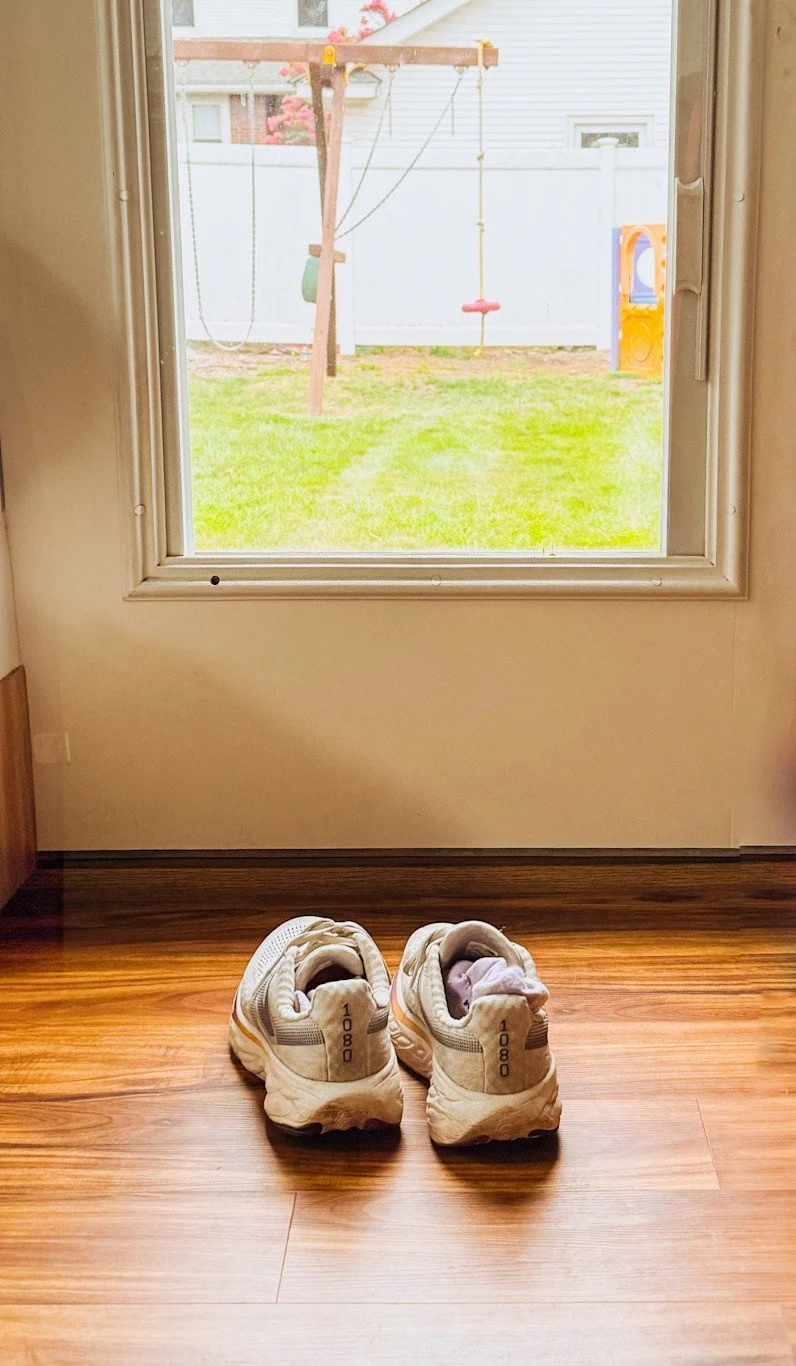
Movement is not about fitness. Movement is about regulation, resilience, and remembering that your body is a place you can return to. When life feels heavy or chaotic, the right kind of movement steadies your mood, supports your metabolism, and helps you feel safe inside yourself again.
Movement is not about fitness.
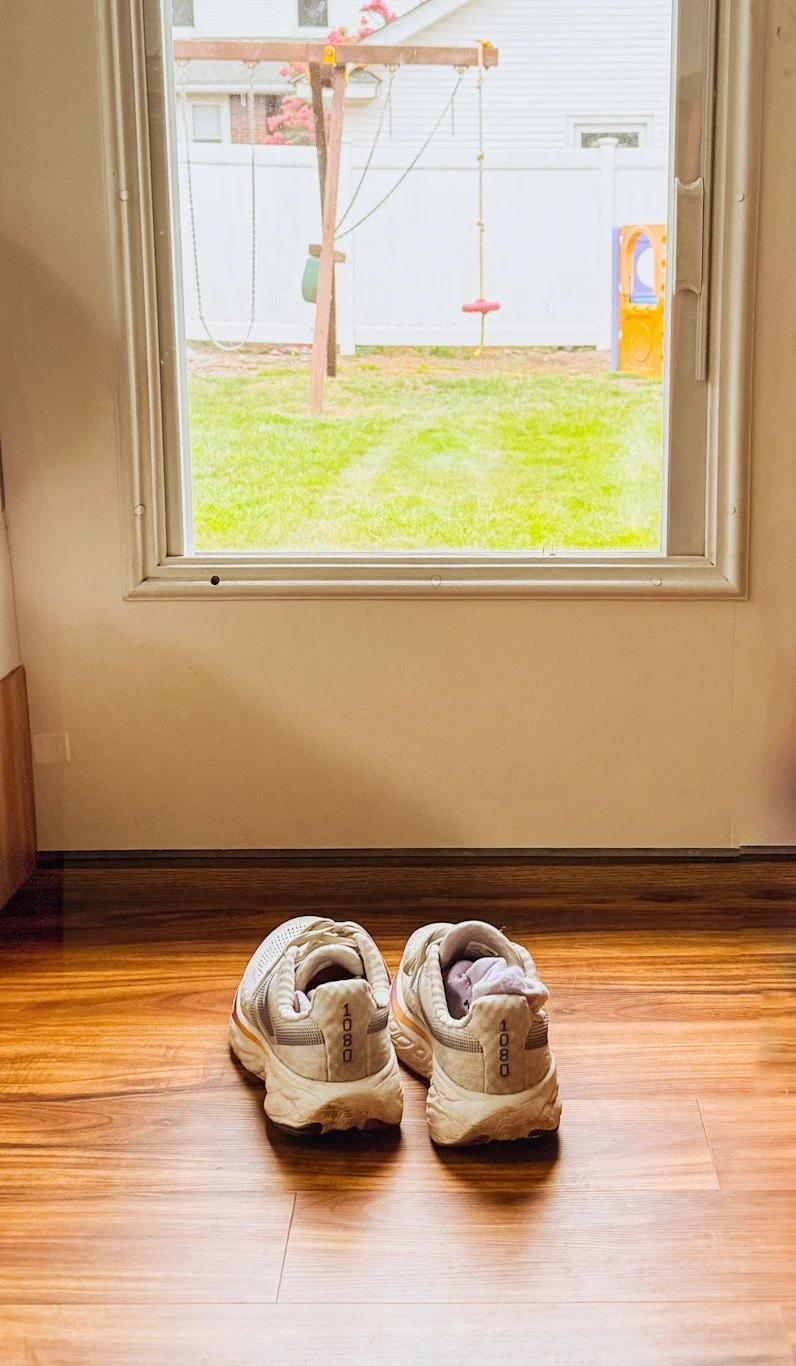
Movement is about regulation, resilience, and remembering that your body is a place to which you can return. It is about feeling safe inside yourself again. It is about having a way to steady your mood, support your metabolism, and move through the world with more clarity and less friction.
If you are navigating hormonal shifts, neurodivergence, chronic stress, or the quiet exhaustion that comes from caring for everyone but yourself, the right kind of movement can change how you feel in ways that go far beyond strength or stamina. Movement is not self-improvement. Movement is self-connection.
Why Walking and Cardio Are Foundational
Cardio is not about burning calories.
It is about keeping your system responsive.
When you walk, dance, swim, or cycle, your body does things you cannot see but absolutely feel. Blood sugar steadies. Blood pressure softens. Mood lifts. Sleep deepens. Thinking sharpens. Energy becomes more reliable. Even a simple walk after meals can regulate blood sugar more effectively than many supplements.
Walking is gentle on the joints, accessible in every decade of life, and powerful in ways the fitness industry rarely talks about. Walking is not easy. Walking is foundational.
Why Strength Training Becomes Essential as We Age
Muscle loss begins earlier than most women realize. Not because you are doing something wrong, but because biology shifts. Strength training helps you slow age related muscle loss, protect bone density, stabilize blood sugar, improve balance and coordination, support cognitive function, and stay functional and independent.
This is not about looking toned.
This is about refusing to become fragile in a world that already treats women as fragile. And yes, even in your seventies or eighties, your muscles can still respond. It is never too late to rebuild strength.
What The Research Recommends and How It Fits into Real Life
The CDC offers clear guidelines, but real life is not a controlled environment. You have responsibilities, fatigue cycles, hormonal shifts, and a nervous system that does not always cooperate on command.
Here is how the research translates into lived experience:
Adults (18 to 64)
150 minutes per week of moderate cardio and 2 days of strength
Real life: short walks after meals, resistance bands while watching TV, squats while the kettle boils
Older Adults (65+)
Same as adults plus balance work
Real life: chair yoga, tai chi, gentle dance, kitchen counterbalance drills
Pregnant or Postpartum
150 minutes per week of moderate aerobic activity
Real life: stroller walks, prenatal yoga, gentle stretching, honoring fatigue cycles
Chronic Conditions or Disabilities
Same goals, adapted
Real life: seated workouts, aquatic therapy, short bursts of movement, consistency over intensity
These are guidelines, not mandates. Your body, your season, and your bandwidth matter. Movement should feel like support, not pressure.
Your Body Changes, So Your Movement Should Too
What worked in your twenties may not work in your fifties. That is not regression. That is wisdom.
Movement needs shift with age:
• Thirties and forties: build strength and cardiovascular capacity
• Fifties and sixties: add mobility, balance, and joint friendly cardio
• Seventies and beyond: prioritize strength, flexibility, and fall prevention
Your body is not failing. Your body is evolving.
Let Us Be Clear About One Thing
I am not here to hand you a workout plan.
Not because I am holding back, but because that is not my lane. It is not the work I do, and it is also out of scope for a health and wellness coach.
What I can do, and what I do exceptionally well, is help you hear your body again so you can understand where to go from here. If you want someone to tell you exactly which exercises to do, that is the moment to bring in a fitness trainer. That is their lane.
But most women do not actually need another routine.
They need a relationship with themselves that is not built on pressure, guilt, or comparison.
You need someone who can help you understand why you avoid movement, why you push too hard, why you burn out, why you freeze, why your body feels different now, and what it is actually asking for. You also need support in figuring out how to implement the routines a fitness trainer may give you in a way that fits your life, your energy, your season, and your nervous system.
My work is helping you build the internal clarity that makes movement sustainable rather than punishing. It is about helping you return to your body with honesty, curiosity, and a sense of possibility.
Art Prompt: My Movement Map
Draw the outline of your body, the one you have today. Around it, add words that describe how you want to feel when you move. Strong. Grounded. Light. Steady. Playful. Add colors or shapes that match those sensations. Then add a few movement ideas that bring you closer to those feelings.
This is not a plan.
This is a conversation with your body.
Final Thought
You do not need discipline culture.
You do not need perfection.
You do not need to keep up with anyone else’s routine.
You need curiosity, compassion, and a willingness to explore what your body is asking for now. If you are ready to reconnect with yourself and build a movement practice that actually fits your life, I am here. My work blends physiology, reflection, and creative tools to help you move with intention rather than obligation.

What I Wish Women Knew About Their Bodies
Many women feel dismissed when their bodies send signals that something is off. This post helps you understand those signals, trust your intuition, and advocate for the care you deserve.

In my work I meet many women who are stretched thin and overwhelmed. They are doing their best to get through the day, but their bodies are not cooperating. They blame themselves for a lack of motivation, when the truth is that motivation is rarely the problem. Most women have plenty of motivation. What they lack are tools, clarity, and support.
Here is what I wish every woman knew.
Your body is not working against you.
Your body is communicating with you.
When something feels off, it is not a personal failure. It is information. Fatigue, irritability, brain fog, cravings, and low stamina are not character flaws. They are signals. And you are allowed to trust those signals.
You will hear people say “accept your body as it is,” and acceptance is important. But acceptance does not mean ignoring what feels wrong. If your body is not responding the way it should, trust your intuition. Seek medical care. Ask questions. Ask again. Look deeper.
If you are exhausted, ask yourself whether this is simply a lack of sleep or whether something metabolic is happening underneath. If your mood is unpredictable, ask whether your hormones are shifting. If your energy crashes every afternoon, ask whether your blood sugar is involved. Your intuition is often the first place where the truth appears.
The reality is that many women are dismissed when they ask for help. They are told that everything is fine when everything is not fine. You do not have to accept that. It is appropriate to ask for second, third, or fourth opinions. It is appropriate to advocate for yourself. It is appropriate to say, “This is not normal for me.”
Your body is not a machine. It is a system. Systems shift. Systems break down. Systems need attention. And women are expected to keep going regardless. We wake up, go to work, care for our families, and hold the emotional load of entire households. When your body stops responding, it is not weakness. It is a signal that something needs care.
If your car breaks, you take it to be repaired. You do not wait for it to fix itself. You deserve the same level of attention.
Your body is not the enemy.
Your body is asking for support.
And you are allowed to listen.
Your body is not asking you to be perfect. It is asking you to pay attention. When something feels off, you are allowed to pause, to question, and to seek support. You are allowed to trust what you feel, even if no one else has named it yet. You are allowed to advocate for yourself until you find answers that make sense.
The direction forward is simple. Begin by listening. Begin by noticing what feels familiar and what feels new. Begin by honoring the signals your body is sending. Begin by asking for help when you need it.
You do not have to figure everything out at once. You only need to take the next honest step toward yourself.
You are not dramatic. You are not imagining it. You are not too much. You are a woman whose body deserves to be taken seriously.
Your body is not a problem to solve. It is a relationship to tend to. When you begin to listen to it with curiosity instead of judgment, everything becomes clearer. You begin to understand what you need, what helps, what harms, and what supports your life. This is where real change begins. Not with discipline, but with awareness. Not with pressure, but with understanding. Not with perfection, but with presence.
If you want to take this reflection deeper, here is a creative prompt.
Art Prompt: Paint What Agency Means to You
Take a moment and think about the word agency. Not the definition, but the feeling. The moment when you knew you could trust yourself. The moment when you stopped apologizing for what your body was trying to tell you. The moment when you chose yourself, even quietly.
Now paint that feeling.
It does not need to look like anything specific.
It can be a color, a shape, a line, a landscape, or a gesture.
Let your brush move the way agency feels in your body.
Steady. Fierce. Soft. Expansive. Grounded. Clear.
This is not about skill.
This is about honoring the part of you that knows.

When the Body Slows Down: A Wellness Coach’s Guide to Hypothyroidism
Hypothyroidism often begins as a heaviness you can’t explain — fatigue, fog, weight gain, mood shifts. Labs may say you’re “fine,” but your body tells another story. This isn’t laziness or aging. It’s a real physiological slowing, and you’re allowed to respond with clarity, support, and self‑trust.

There is a particular kind of exhaustion that sleep does not fix, a heaviness that settles into the body and a fog that drifts across the mind, a quiet sense that something inside has dimmed. For many people this is the first whisper of hypothyroidism, a slowing of the small butterfly‑shaped gland in the neck that helps regulate metabolism, energy, and mood. It is a shift that can feel subtle at first, almost like life has become slightly out of reach, as if you are moving through your days wrapped in a thin layer of distance.
What makes hypothyroidism so difficult to recognize is how easily it blends into the noise of modern life. Fatigue becomes normal, weight gain becomes self‑blame, forgetfulness becomes stress, sadness becomes personality. You might feel like you are dragging yourself through the day or losing words mid‑sentence or watching your life from behind a pane of glass. You might feel cold when others are warm or notice your hair thinning or your digestion slowing or your mood flattening. And because weight gain is so moralized in our culture, many people assume they have failed rather than realizing their body is slowing for reasons that have nothing to do with discipline.
Sometimes the labs come back “normal” even when nothing about your life feels normal. This is one of the most painful parts of hypothyroidism. You feel the heaviness, the fog, the slowing, the weight gain, the disconnection, and the numbers tell you that you are fine. But numbers do not live in your body. You do. And you are allowed to trust what you feel even when the labs have not caught up yet.
As a coach I do not diagnose, but I do listen, and when I hear these patterns I invite clients to consider what their body might be trying to say. Sometimes that means exploring a full thyroid panel, not only TSH but also Free T4, Free T3, and thyroid antibodies that can reveal whether the immune system is involved. These antibodies can appear years before hormones shift, small signals that something deeper is stirring. You might still be functioning, still pushing, still performing, but the fog is already forming at the edges. Paying attention early is not fear. It is agency. It is the moment you decide that your exhaustion deserves more than a motivational quote or another cup of coffee.
Support can take many forms, and none of them require perfection. Nourishment that steadies you. Movement that does not punish you. Rest that is not earned. A slower pace that is not a failure. Conversations with providers where you ask the questions you were taught not to ask. You are allowed to understand how your symptoms are being weighed alongside your labs. You are allowed to explore treatment options. You are allowed to participate in your care rather than simply comply with it.
Hypothyroidism invites you to honor slowness not as a flaw but as a message. Restorative practices, breath that softens the edges of the day, gentle strength that rebuilds trust between you and your body. Naming what is happening matters too, because the shame that often accompanies fatigue or weight gain begins to dissolve when you understand that this is not a lack of willpower. It is a physiological shift, and you are allowed to respond to it with clarity rather than criticism.
You do not have to accept heaviness as your new normal. You do not have to make peace with a body that is asking for help. You get to intervene. You get to participate. You get to choose the pace that brings you back to yourself.
Hypothyroidism is not laziness. It is not aging. It is not a personal failure. It is a physiological slowing, and you are allowed to meet it with care. Agency is not about forcing the body to speed up. It is about listening to what the body is asking for and responding in a way that honors both your biology and your becoming.
Art Prompt: The Weight I Carry
Choose one place in your body where you feel the weight of this season, whether physical or emotional, and create an image that gives that weight shape. Let color or texture or movement express how it feels to carry it. Then imagine what lightness might look like beside it, not as a replacement but as a possibility. Let the contrast show you where your agency lives, in the space between what is heavy and what is ready to shift.
Menopause, Bone Loss, and Oral Health: The Connection We Rarely Talk About
Hormonal changes during menopause affect far more than we expect, including the jawbone and gums. This piece explores how bone loss shows up in the mouth and why prevention matters.
Last week I had the pleasure of joining a small conversation about women’s health, held at Clemente Orthodontics in Ridgewood, New Jersey. It was a topic many of us rarely think about, even though it affects every woman as she ages. We often hear that bone mass and muscle mass decline over time, and that menopause accelerates that loss. This is biology. What most women do not realize is that this loss does not occur only in the arms and legs. It also occurs in the mouth.
Menopause brings a wide range of symptoms, and one of the most significant is hormonal imbalance. These hormonal shifts affect the jawbone and increase inflammation, which in turn affects the gums. This is why many women notice bleeding during dental cleanings, even when they have excellent oral hygiene. It is not a failure of brushing or flossing. It is a reflection of what is happening hormonally and structurally in the body. And the only meaningful way to address it is prevention.
Kathleen, a nurse practitioner at The Wellness in Ridgewood in New Jersey, works with women to test hormone levels and determine whether hormone replacement therapy is an appropriate option. According to her, when women are proactive and get tested early, there is a real opportunity to reduce symptoms that can become severe and disruptive. When hormone support is paired with resistance training, women can significantly reduce or even prevent the bone and muscle loss that accelerates during menopause.
Resistance training does not have to be complicated. It can include bodyweight exercises, resistance bands, light weights, Pilates with springs, or machines that provide controlled load. The goal is not intensity. The goal is stimulus. When muscles pull on bones, the bones respond by maintaining or increasing density. This applies to the hips, the spine, the legs, and yes — the jawbone. Strength training is not only about aesthetics or fitness. It is a direct investment in long‑term bone health.
Dr. Moon, a periodontist at Moon Implants and Perio in Montvale, New Jersey, explained that she often sees the effects of aging and menopause directly in the mouth. She shared that teenagers with braces and poor oral hygiene can show no bone loss at all, while older women with excellent oral hygiene may show significant bone loss simply because hormonal changes affect every bone in the body, including the jaw. A periodontist is a specialist in gum and bone health, and they can identify these early changes and help women understand how oral bone loss reflects what is happening throughout the body.
This is the part of women’s health that often goes unspoken. We think of menopause as hot flashes or mood changes, but it is also about bone density, muscle strength, oral health, and long‑term quality of life. The earlier we understand this, the more empowered we become to protect our bodies as we age.
Art Prompt: Where Strength Lives Now
Choose one part of your body that feels different with age, the place where you notice change first, the place you return to with curiosity or frustration or tenderness. It might be your legs or your breath or your posture or your hands. Create an image that shows the strength that still lives there, even if that strength has changed shape. Let the artwork be a conversation with the part of you that is aging and still carrying you, a reminder that aging is not disappearance but transformation.